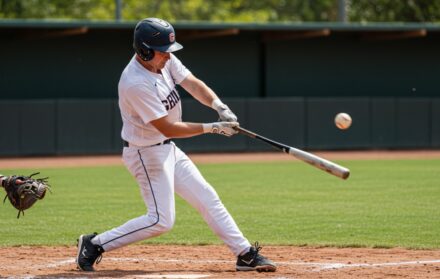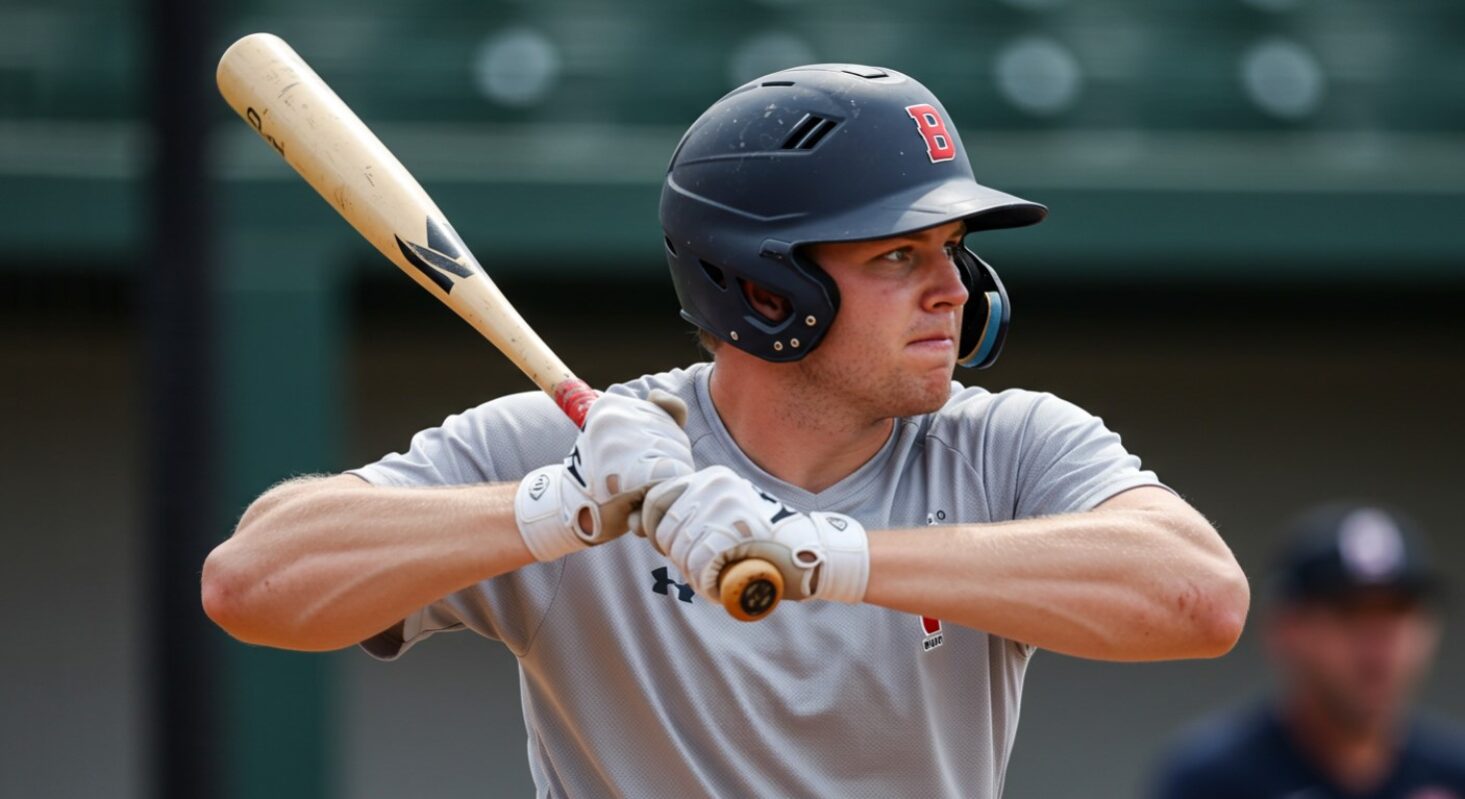
What’s the Best Two-Strike Approach for Hitters?
Some of the greatest moments in baseball have come with a hitter’s back against the wall — two strikes, the game on the line, and everything hinging on one pitch. In the 2016 World Series, for example, Cubs veteran Ben Zobrist delivered a clutch extra-inning hit with two strikes, setting up the run that finally ended Chicago’s 108-year title drought. That kind of execution under pressure can define not only games, but entire careers.
But how do hitters succeed in those situations? What separates players who routinely deliver with two strikes from those who fold? The answer lies in having a reliable two-strike approach — a set of adjustments to stance, swing, and mindset that maximises survival and productivity when one more strike means walking back to the dugout.
This article examines what makes the best two-strike approach: the principles, the mechanics, situational adjustments, drills to practise, examples from pros, and the pitfalls to avoid. Whether you’re a youth player learning discipline, a high schooler facing tougher pitching, or an advanced hitter looking for consistency, mastering two-strike hitting can change your game.
Why the Two-Strike Count Is Unique
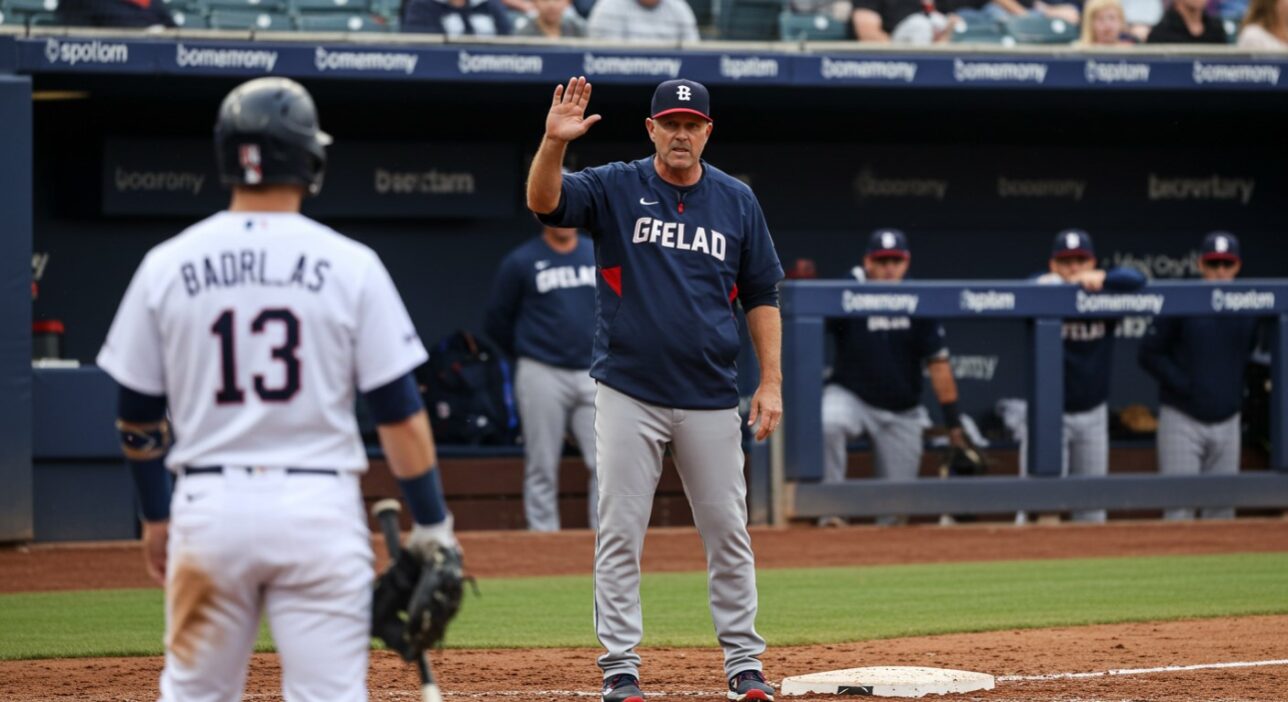
No other count in baseball creates the same combination of urgency and pressure as two strikes. One mistake, one misread pitch, and the at-bat is over. For pitchers, it’s an opportunity to expand the zone, change speeds, and put the hitter on the defensive. For hitters, it’s a moment that demands resilience, adaptability, and discipline.
Pitchers often change their patterns with two strikes. Instead of challenging hitters with fastballs, they are more likely to throw breaking balls, off-speed pitches, or fastballs elevated just out of the zone to tempt a chase. This forces batters to track spin and timing more carefully.
Another key element is the foul ball. With two strikes, fouling pitches off becomes a weapon. It extends the at-bat, tyres the pitcher, and creates opportunities for mistakes. Some of the best contact hitters in history, like Tony Gwynn, thrived by using foul balls to prolong plate appearances until they got a pitch they could handle.
Finally, the psychology of two strikes matters. Many hitters fall into panic, swinging defensively or chasing bad pitches. The best hitters, however, treat two strikes as a challenge to stay calm, simplify their mechanics, and execute their plan.
Core Principles of a Sound Two-Strike Approach
The two-strike approach isn’t about abandoning your swing completely — it’s about refining it. The best hitters make small but critical adjustments that help them survive while still producing quality contact.
-
Shorter, more compact swing: Lengthy swings are more likely to miss against sharp breaking balls or high velocity. With two strikes, hitters shorten the path of the bat to the ball, focusing on efficiency.
-
Keep the bat in the zone longer: A compact swing that stays level through the hitting zone gives hitters more margin for error, increasing chances of fouling tough pitches and squaring up hittable ones.
-
Controlled coverage: Many hitters adopt a mindset of covering the plate, especially the inside half, while trusting their hands to adjust to the outer third. This reduces vulnerability to strikeouts.
-
Use foul balls smartly: Instead of fearing two-strike fouls, hitters can intentionally spoil difficult pitches, especially with runners on base or in tight games.
-
Selective protection: Not every borderline pitch should be swung at. Experienced hitters learn to distinguish between strikes they can handle and unhittable pitches designed to induce chases.
At its heart, the best two-strike approach is about control of mechanics, strike zone discipline, and emotions.
Adjustments by Pitch Type With Two Strikes
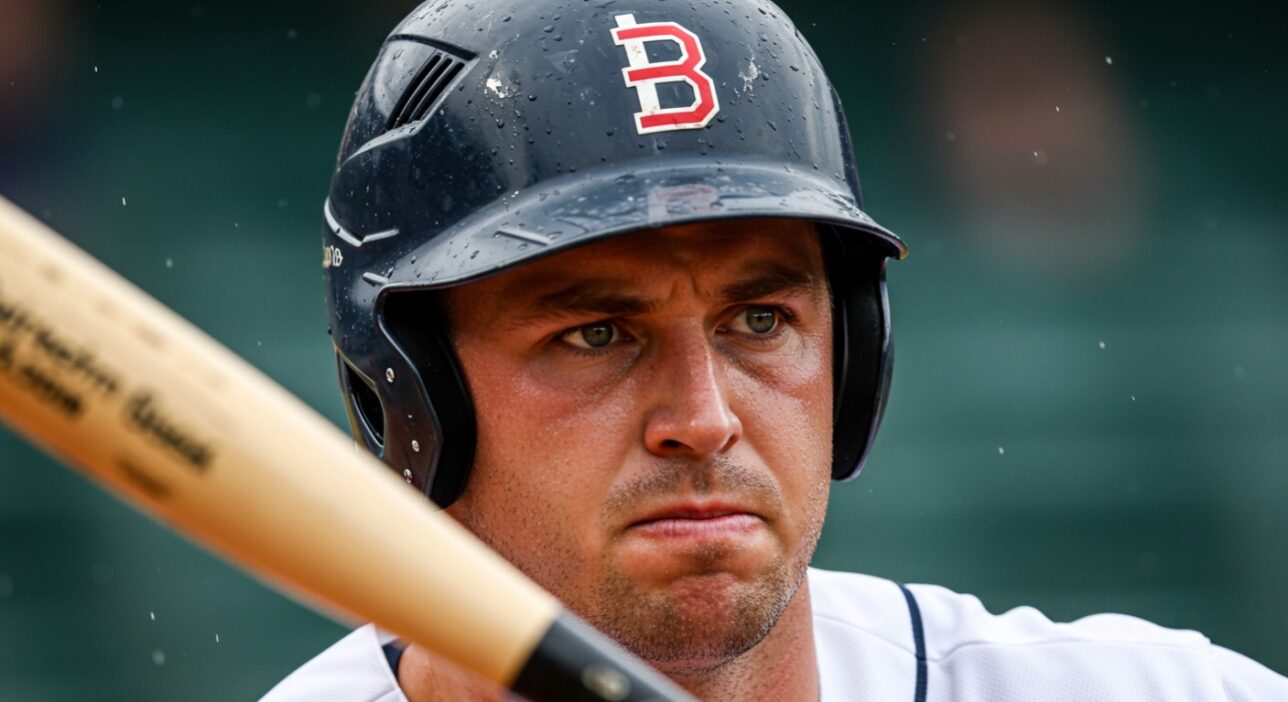
The right adjustments also depend on what pitchers are likely to throw in two-strike counts.
-
Fastballs: Many pitchers elevate fastballs to generate strikeouts. Hitters must resist the urge to chase the high heater and instead stay balanced, looking to drive it the opposite way if it catches too much plate.
-
Breaking balls: With two strikes, sliders and curveballs become primary weapons. Hitters should focus on picking up spin early out of the hand and adjusting timing to stay back. Leaning forward too soon often leads to whiffs.
-
Off-speed pitches: Changeups and splitters thrive in two-strike situations because they mimic fastballs until late. The key adjustment is patience — recognising that staying back is safer than lunging forward.
-
Pitch sequencing: Hitters must also anticipate patterns. If a pitcher just threw two fastballs, a breaking ball may be coming. Anticipating the “out pitch” helps reduce surprise.
Swing path adjustments are subtle: keeping hands tight, shortening stride, and being ready to flick foul balls off tricky pitches all contribute to survival.
Situational Two-Strike Hitting
Not all two-strike situations are equal. The game context should shape a hitter’s approach.
-
With runners on base, the priority shifts to moving runners rather than swinging for power. A ground ball to the right side with two strikes can still be a win if it advances the runner.
-
Runner at third, fewer than two outs: A strikeout is devastating here. The goal becomes putting the ball in play, even weakly, to create a chance for a run to score via a grounder or sacrifice fly.
-
Two outs: With no chance of a productive out, hitters may widen their zone slightly, protecting against borderline pitches to avoid striking out looking.
-
Late innings in close games: Balance between aggression and discipline matters most here. Some hitters expand their swing zone to avoid going down, while others stick rigidly to compact mechanics to stay alive.
The best hitters learn to tailor their two-strike approach not only to the count, but also to the scoreboard and base state.
Drills & Practice Methods
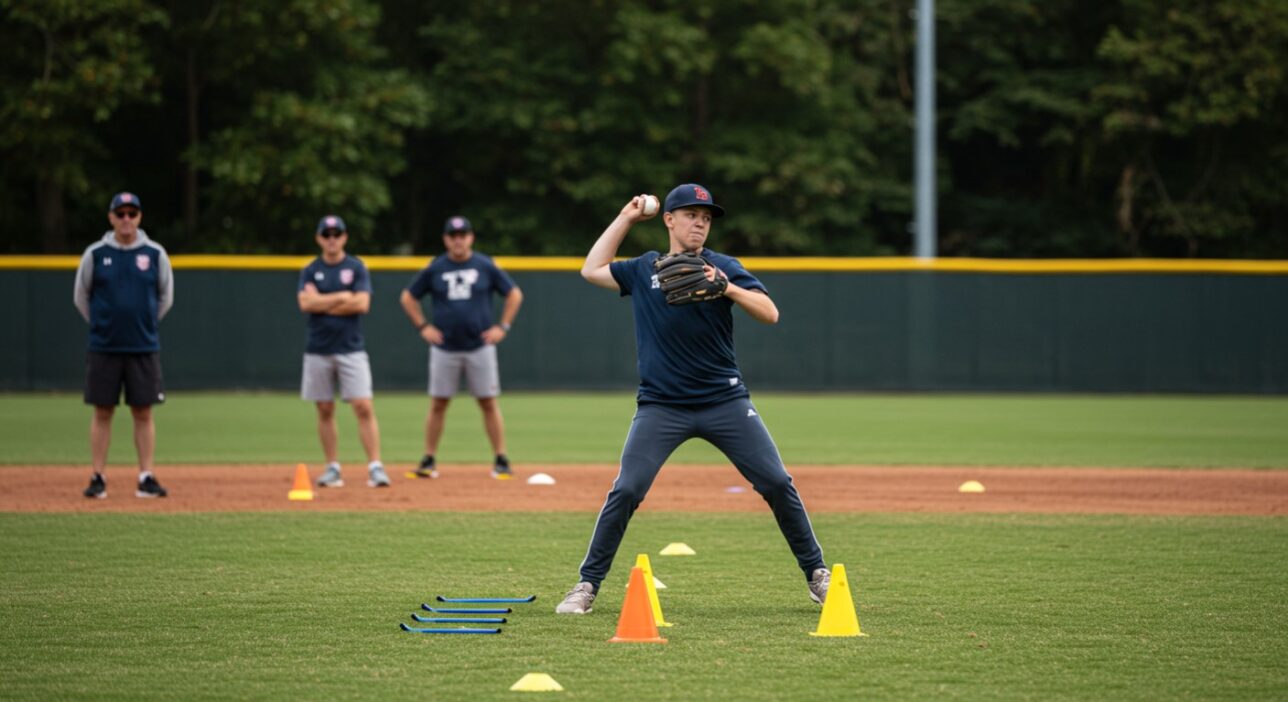
Like any skill, two-strike hitting improves with repetition. Coaches often use specific drills to simulate the pressure and mechanics required.
-
Transition drills: Start hitters in one-strike counts, then shift to two strikes mid-round to practise adjusting mechanics and mindset quickly.
-
Foul-ball extension reps: Encourage hitters to spoil pitches intentionally, focusing on control and survival. This trains bat control and zone awareness.
-
Machine/live drills: Set machines to randomise pitch speeds and zones, or have pitchers focus on throwing two-strike sequences.
-
Mixed-speed machines: Alternating fastballs with off-speed pitches builds timing flexibility.
-
Video review: Analysing two-strike at-bats helps players identify patterns — both their strengths and their weaknesses.
The more players practise these situations, the more natural their two-strike approach becomes in games.
Real Player Examples & Case Studies
Certain hitters are celebrated for their ability to thrive in two-strike counts. Tony Gwynn famously struck out just 434 times across 10,232 plate appearances, an astonishing record of two-strike resilience. His approach relied on shortening his swing and spraying hits to all fields.
Dustin Pedroia was another modern example, often choking up on the bat with two strikes to increase contact. His ability to foul off tough pitches made him a nightmare for pitchers trying to put him away.
Clutch two-strike hits also define history. In the 2011 World Series, David Freese delivered multiple game-changing hits with two strikes, including his iconic triple in Game 6 that sparked the Cardinals’ comeback.
Statistics reinforce the importance of approach: league-wide, batting averages drop drastically with two strikes, but hitters who consistently adjust their mechanics and mental approach often beat the averages.
Common Mistakes & Pitfalls
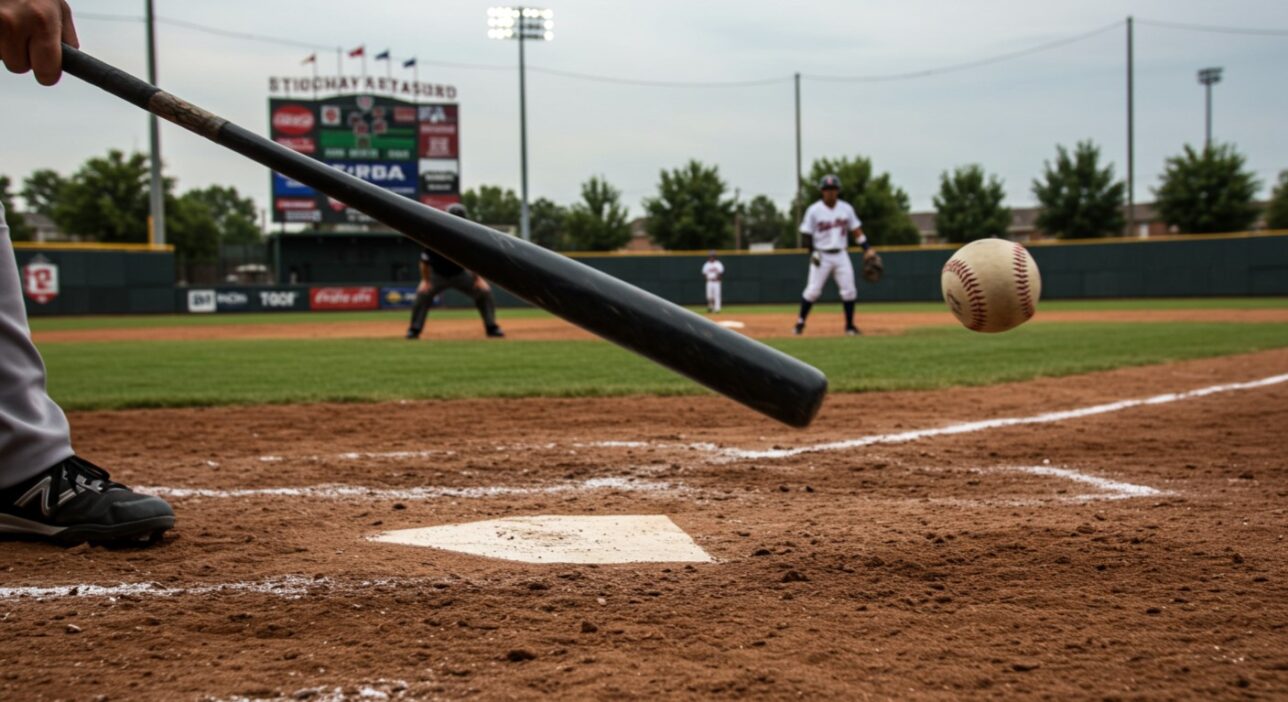
Many hitters falter in two-strike counts not because of talent, but because of poor strategy or mindset.
-
Over-swinging: Some players try to muscle up instead of shortening their swing, leading to weak contact or strikeouts.
-
Freezing: Others hesitate, paralysed by fear of striking out, and end up caught looking at borderline pitches.
-
Lack of practice: Many hitters don’t practise two-strike counts enough, making them unprepared when it matters.
-
Breaking mechanics: Under pressure, hitters often lose balance, stride too early, or chase out of desperation.
-
Forcing power swings: Especially with runners on, hitters sometimes prioritise the long ball instead of simply putting the ball in play.
Avoiding these pitfalls requires training, awareness, and a willingness to adjust.
FAQs
Should I ever bunt with two strikes?
Generally no. A missed bunt attempt with two strikes counts as a strikeout. The risk usually outweighs the reward, unless it’s a surprise drag bunt and the hitter is confident.
Is fouling off pitches smart with two strikes?
Yes. Fouling off tough pitches is a vital survival tactic. It extends the at-bat, increases the pitcher’s pitch count, and often leads to mistakes over the plate.
When is it ok to be aggressive with two strikes?
With two outs and runners in scoring position, hitters may widen their zone slightly and look to attack hittable pitches. Aggression is acceptable if it matches the game context and pitch type.
How long should I stay defensive in two-strike counts?
As long as necessary. Some pitchers throw multiple “waste pitches” before challenging. Staying patient and spoiling pitches until you see one you can drive is often the best strategy.
Conclusion: Two-Strike Approach
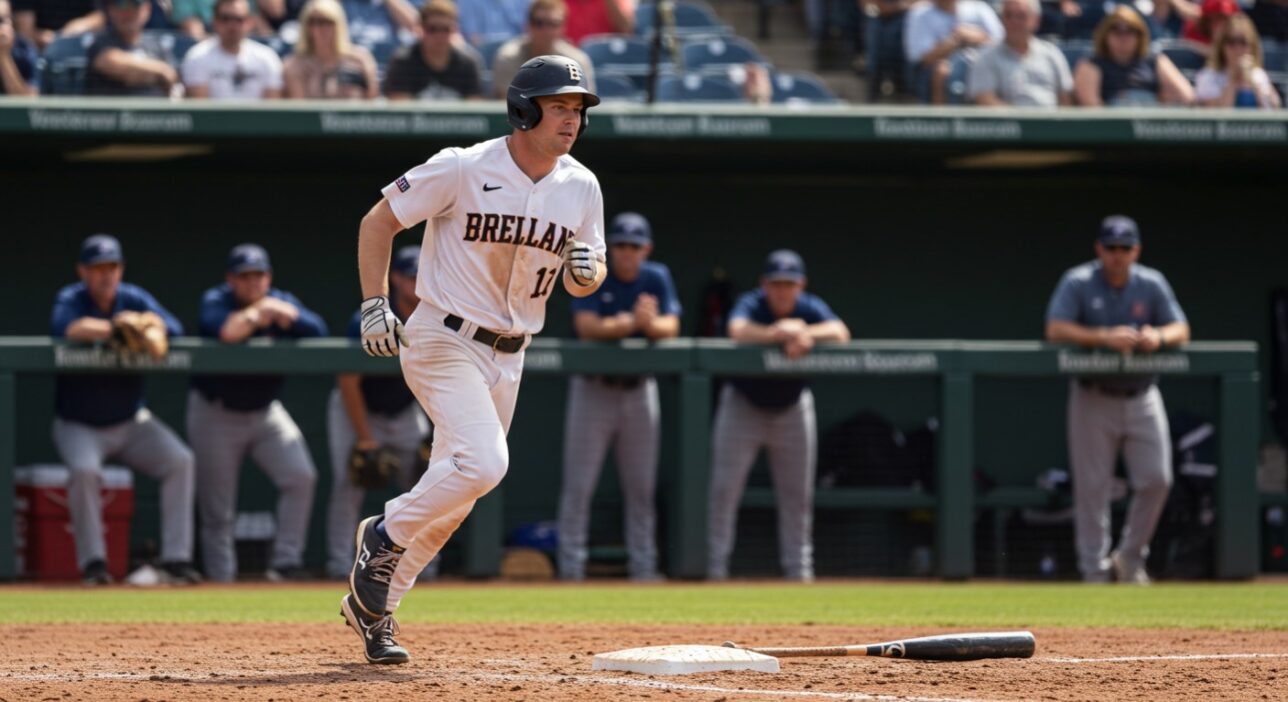
The best two-strike approach blends mechanics, mindset, and situational awareness. Compact swings, extended plate coverage, patience against breaking balls, and smart use of foul balls give hitters the tools to survive and succeed.
There’s no single formula for the “best” approach. Some hitters choke up and shorten dramatically, while others simply adjust timing and pitch selection. What matters is consistency, adaptability, and commitment to practising under real-game pressure.
For players at all levels, mastering the two-strike approach turns strikeout scenarios into opportunities. It builds resilience, extends innings, and creates clutch moments that can change games. Commit to practising it, refine it to your style, and you’ll find two-strike counts becoming less of a threat — and more of an advantage.